
Be your ownrange safety officer
The shooting range can be one of the most dangerous places you will visit if it is not taken seriously. Everyone on the line is permitted to carry a firearm. Not everyone on the line has been trained to handle one, and no range is monitored closely enough to react to every mistake the moment it is made.
That is not an argument for staying away from the range. It is an argument for arriving at one knowing exactly what you are doing, and for keeping your attention up the whole time you are there.
National Safety Center · Updated
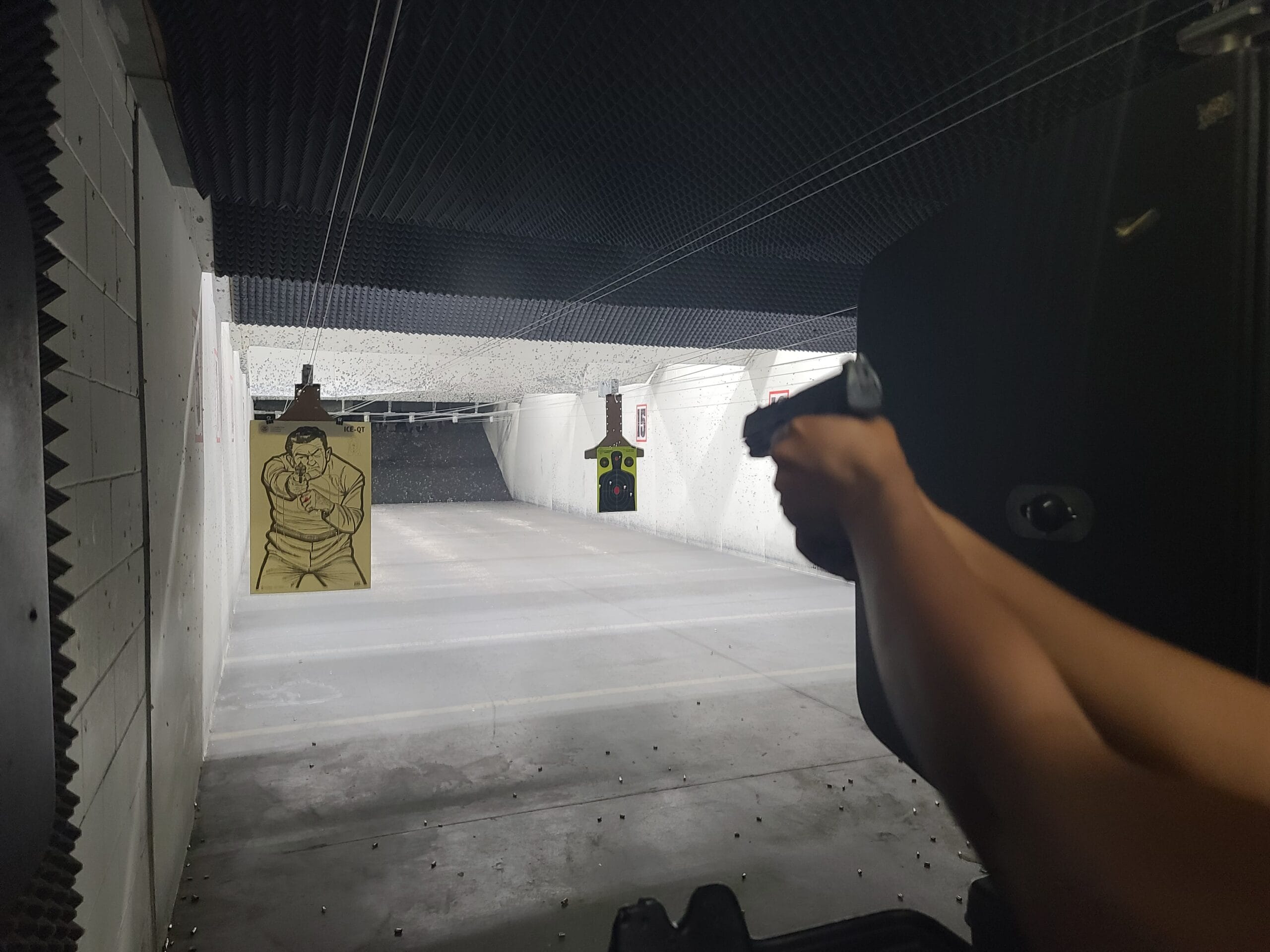
Every range has a range safety officer. Every person on the line should be their own. Trust no one, and stay aware of your surroundings.
Ten rules to work by at any range
None of these are complicated. All of them are broken regularly, usually by someone who has been shooting long enough to stop thinking about them.
- Treat every firearm as loaded
- Even when you know it is not, handle it as though it is. And never point a firearm at anything you are not willing to destroy.
- Finger off the trigger
- Keep your finger off the trigger until you are ready to shoot. It is one of the most basic rules of firearms safety, and one of the easiest to let slip.
- Know your firearm
- Understand how the firearm you are holding actually operates. Read the manual and become familiar with loading, unloading, clearing and making it safe before you bring it to a range.
- Eyes and ears, every time
- Wear proper eye and ear protection. The sound of gunfire causes hearing damage, and debris coming off the firing line causes eye injuries.
- Learn the range rules
- Every range has its own set of rules. Know them before you step onto the line, and follow them. They exist because of something that happened somewhere.
- Muzzle downrange
- Always point your firearm in a safe direction. On a range, that means downrange, at all times, including while you load, clear a malfunction and pack up.
- Watch the line around you
- Be aware of your surroundings. Know who is shooting near you, and be mindful of where they are pointing their firearms.
- Unloaded until you are ready
- Keep your firearm unloaded until you are ready to shoot. That includes transporting it to and from the range.
- Nothing that dulls you
- Never consume alcohol or drugs before or during shooting. Either one impairs judgment and reaction time, and you will not be the one who notices.
- Know what is beyond the target
- Always be sure of your target and what lies beyond it. If you are not sure what is behind it, you do not shoot.
Accidents at the range
Accidents can and do happen at shooting ranges, and they happen to experienced shooters as readily as to first-timers. The incidents below are a few examples of what can go wrong when safety is not taken seriously.
- 2014
- A 9-year-old girl accidentally shot and killed an instructor at a shooting range in Arizona.
- 2016
- A man accidentally shot himself in the head at a shooting range in Michigan.
- 2017
- A 14-year-old boy accidentally shot and killed himself while at a shooting range in Massachusetts.
- 2018
- A woman accidentally shot herself in the leg while at a shooting range in Arizona.
- A man accidentally shot himself in the leg at a shooting range in Georgia.
- A man accidentally shot himself in the leg at a shooting range in Texas.
- 2019
- A man accidentally shot himself in the chest at a shooting range in Virginia and later died from his injuries.
- A woman was killed at a shooting range in Missouri when a man accidentally fired his weapon in her direction.
- 2020
- A man accidentally shot himself in the foot while at a shooting range in New Hampshire.
- 2023
- A woman accidentally shot her friend while at a shooting range in Texas.
The bottom line: a range is a genuinely rewarding place to build a skill, and the vast majority of days there pass without incident. That is a consequence of how people behave on the line, not an accident of it. Follow the rules above, stay vigilant, and the range stays what it should be.
Rules on a page are not habits on the line
Reading the ten rules takes two minutes. Making them automatic, muzzle discipline that holds while you are fumbling a magazine, a trigger finger that indexes without being told, takes a few hours with someone standing beside you who will correct you the instant it slips. That is what a class is for, and it is the reason we teach the way we do.
Our Basic Pistol course is classroom instruction and supervised range time in one session, the knowledge first, then the hours on the line that turn it into handling you can rely on. It is the right starting point whether you have never held a pistol or you have owned one for years and never had anyone check your fundamentals.
- Private Basic Pistol
- $180 per student · 3 hrs · your date and time
- Group Basic Pistol
- $160 per student · 4 hrs · seats open now
One note on Florida law
Since July 1, 2023, Florida no longer requires a permit to carry a concealed firearm if you are legally able to possess one. Much of what is written about Florida carry predates that change, so treat any claim that a permit is legally required to carry concealed as out of date.
A Florida concealed weapon license still has real value. A number of other states will accept it under reciprocity agreements, and it carries other conveniences for the people who hold one. Requirements and restrictions do change, so confirm the current position with the Florida Department of Agriculture and Consumer Services before you rely on any of it.
Our guide to the Florida permit applicationCheck whether you are eligible
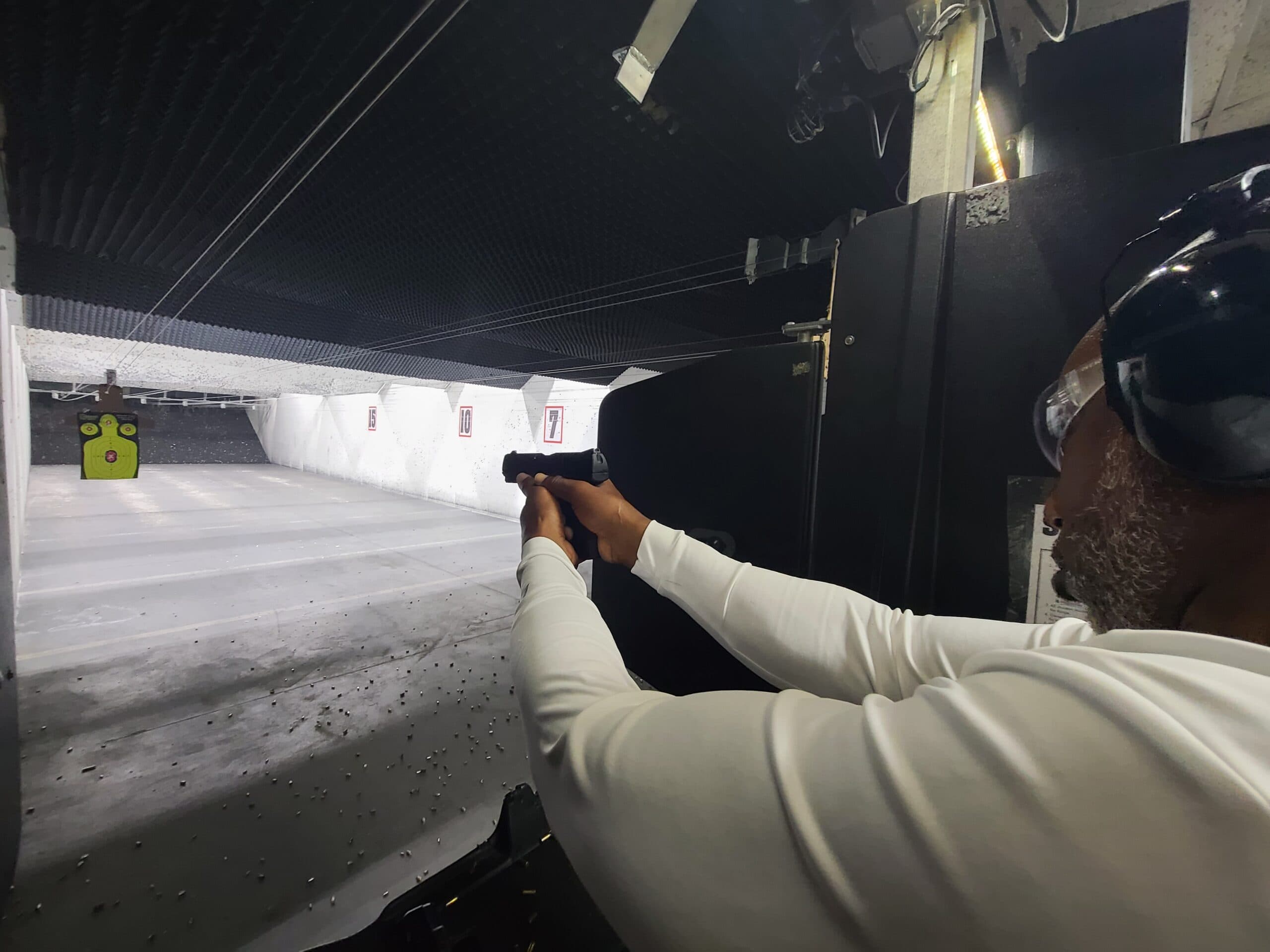
Train until it is automatic
Private training is bookable online in about a minute, on your date, at your pace. Fully refundable up to 72 hours before class.