
Permitless carry changedthe law, not the responsibility
Carrying a concealed firearm in Florida no longer requires a permit. Nothing in that removes the obligation of a gun owner to be safe and knowledgeable in the handling and use of a firearm. It only changes who is responsible for making sure it happens.
We are a firearms training school, and we have no interest in the political argument around any of this. We have a great deal of interest in what happens at the moment somebody reaches for a firearm they have never been taught to use.
Florida has allowed permitless concealed carry since 1 July 2023. A person who is legally able to possess a firearm may carry it concealed in Florida without holding a Concealed Weapon License.
The licence still has real value. It is what other states recognise under their reciprocity agreements when you travel, and it continues to carry practical conveniences at home. Restrictions on where a firearm may be carried have not gone away either.
Requirements change. Confirm the current rules with the Florida Department of Agriculture and Consumer Services, which issues the licence, before you rely on any of it.
Why we teach it exactly the way we always did
National Safety Center has always held that responsible gun ownership requires proper training and education. That was our position before the law changed and it is our position now, unaltered. The change to Florida’s gun laws brought both excitement and concern, some read permitless carry as a victory for gun rights, others worry about the consequences of untrained people carrying firearms in public. We are not going to settle that argument here.
What we will say is that common sense and a smart approach point the same direction they always did. A statute can tell you what you are permitted to do. It cannot tell you whether you can do it safely, at speed, with your hands shaking. Nothing in the law has ever been the thing that made someone competent with a firearm.
If anything, the case for training is stronger now than it was. The permit application used to place a certificate, and behind it a classroom and a live fire session - in front of nearly everyone who wanted to carry. Today, nothing does. The training happens because you decide it should.
What the training actually covers
Proper training is not only necessary for your own safety. It is necessary for the safety of everyone around you. The more knowledge and experience you have with a firearm, the less likely you are to make a mistake that cannot be taken back.
- Firearms safety
- Loading, unloading, storage and the handling habits that keep a muzzle off anything you are not willing to destroy. This is the part people assume they already know.
- Marksmanship
- Grip, stance, sight alignment and trigger control, what it takes to hit what you are aiming at, and to know honestly whether you can.
- Defensive shooting
- Applying those fundamentals while moving and under pressure, which is a different skill from putting rounds into a paper target at a lane.
- Situational awareness
- Reading what is around you early enough to react quickly and effectively, and often early enough that the firearm stays exactly where it is.
- Legal considerations
- What Florida law says about possessing and carrying a firearm, and the places where carrying remains off-limits regardless of what you hold.
What the absence of training costs
Training teaches safe and proper handling, and it teaches situational awareness, marksmanship and the other skills that let a gun owner react quickly and effectively in an emergency. Going without it is not a neutral choice. It has three predictable costs.
Accidents that were entirely preventable
Accidental shootings are far too common, and a great many of them come down to a lack of training and education in firearms safety. A negligent or accidental discharge can cause serious injury or death, and it takes no more than one moment of not knowing what you are doing.
Legal trouble nobody saw coming
An untrained owner is often unfamiliar with state law on the possession and use of firearms. That unfamiliarity leads to real consequences, fines, imprisonment, and the loss of the right to own a firearm at all.
Nothing to fall back on under pressure
In a high-pressure situation it is difficult to recall technique you have never drilled. An untrained owner may simply not be prepared for the stress that comes with using a firearm in self-defence, which is the one moment when preparation is all you have.
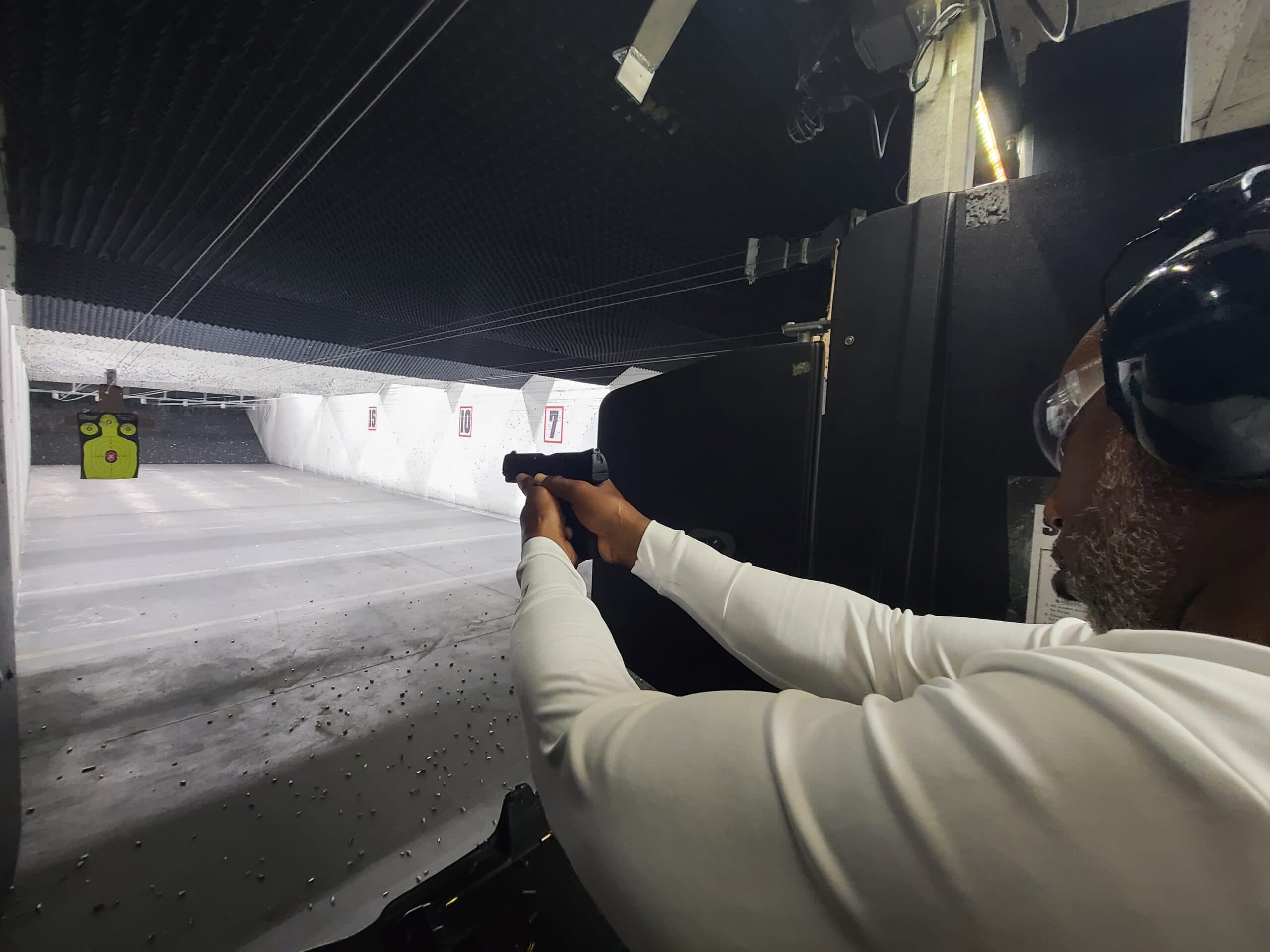
The draw is the part that gets skipped
Many accidents happen not during the shooting, but while the firearm is coming out of the holster.
This matters most in exactly the situation people carry for. In self-defence, seconds decide the outcome, and the draw is the first of them. Knowing how to shoot a paper target at a range is not the same as being able to bring a firearm out cleanly while keeping control of the muzzle and awareness of everything around you.
Neglect that part of the training and you are carrying a risk you have never rehearsed - to yourself first, and to the people standing near you second. Learning to draw safely and effectively is not an advanced extra. It belongs in the same lesson as everything else, which is where we put it.
Regardless of what the law requires
Responsible gun ownership goes beyond carrying a firearm. It means being educated, prepared, and able to make an informed decision about when and how a firearm should be used, and, far more often, when it should not be.
Our commitment is to provide the resources and the training that make people safe, knowledgeable gun owners: comprehensive courses that reduce the risk of accidents and raise real skill. The debate over gun laws and ownership will carry on without us. We will keep focusing on the part we think matters most, that the people who choose to own and carry firearms do it responsibly.
Train because you chose to
Private training is bookable online for the date and time you want, one-on-one, or with the people you would actually be around. Fully refundable up to 72 hours before class.
Still want the licence for travel and reciprocity? Our walkthrough of the Florida application takes about fifteen minutes end to end.