
The NSC Hub · Firearms safety
Your first pistol class,start to finish
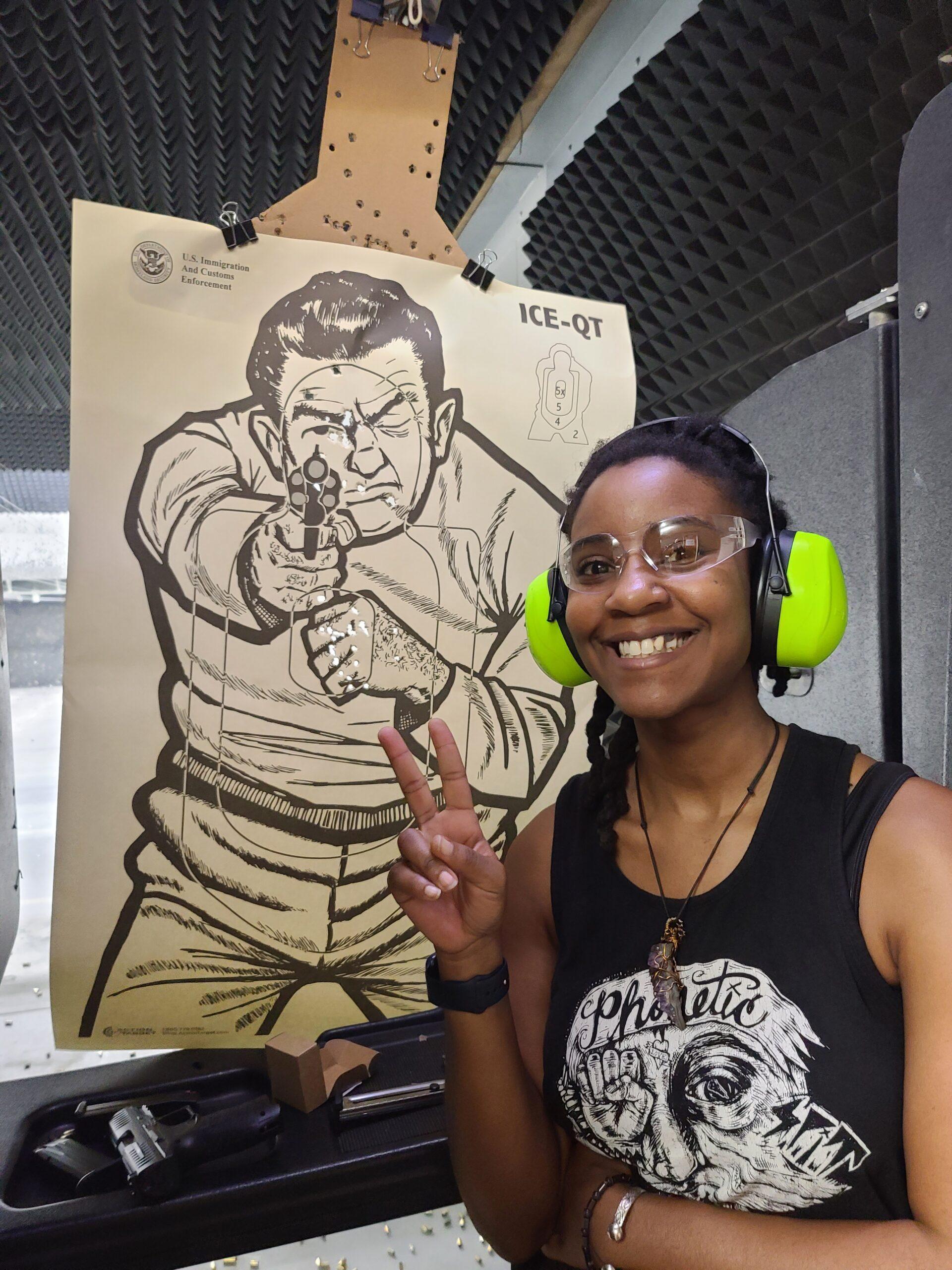
You do not need to have fired a gun, or to own one, to take a first pistol class. At National Safety Center the class starts in the classroom with safety and handling, moves to the range for supervised live fire with an instructor beside you, and ends with a certificate.
Bring your confirmation email, eye and ear protection if you already own them, and your questions. This page walks through the class in order, so nothing about the day is a surprise.
- The class
- Basic Pistol, taken as a group class or as a private session
- Experience needed
- None. You do not need to have held a pistol before
- Taught by
- National Safety Center’s own NRA-certified instructors
- You leave with
- A certificate of completion, and the habits behind it
- Last checked
- November 2026
National Safety Center · Published and last checked
Who is a first pistol class for?
Basic Pistol is the class a first-time shooter takes. It is the right starting point whether you have never held a pistol or you have owned one for years and never had anyone check your fundamentals.
It is classroom instruction and supervised range time in one session: the knowledge first, then the time on the line that turns it into handling you can rely on. You can take it as a group class on a date we schedule, or as a private session on a date you choose.
Not every class goes to a range. The class pages say, class by class, which ones include live fire and which stay in the classroom, so check that line before you book.
What happens, from arrival to the last shot?
The order matters more than the clock. You are never handed a loaded pistol and asked to work it out. Each step below is finished before the next one starts.
You arrive
Your confirmation email names the location and the address under "Where to go". We teach at more than one Central Florida location, so read that line rather than assuming.
Safety comes first
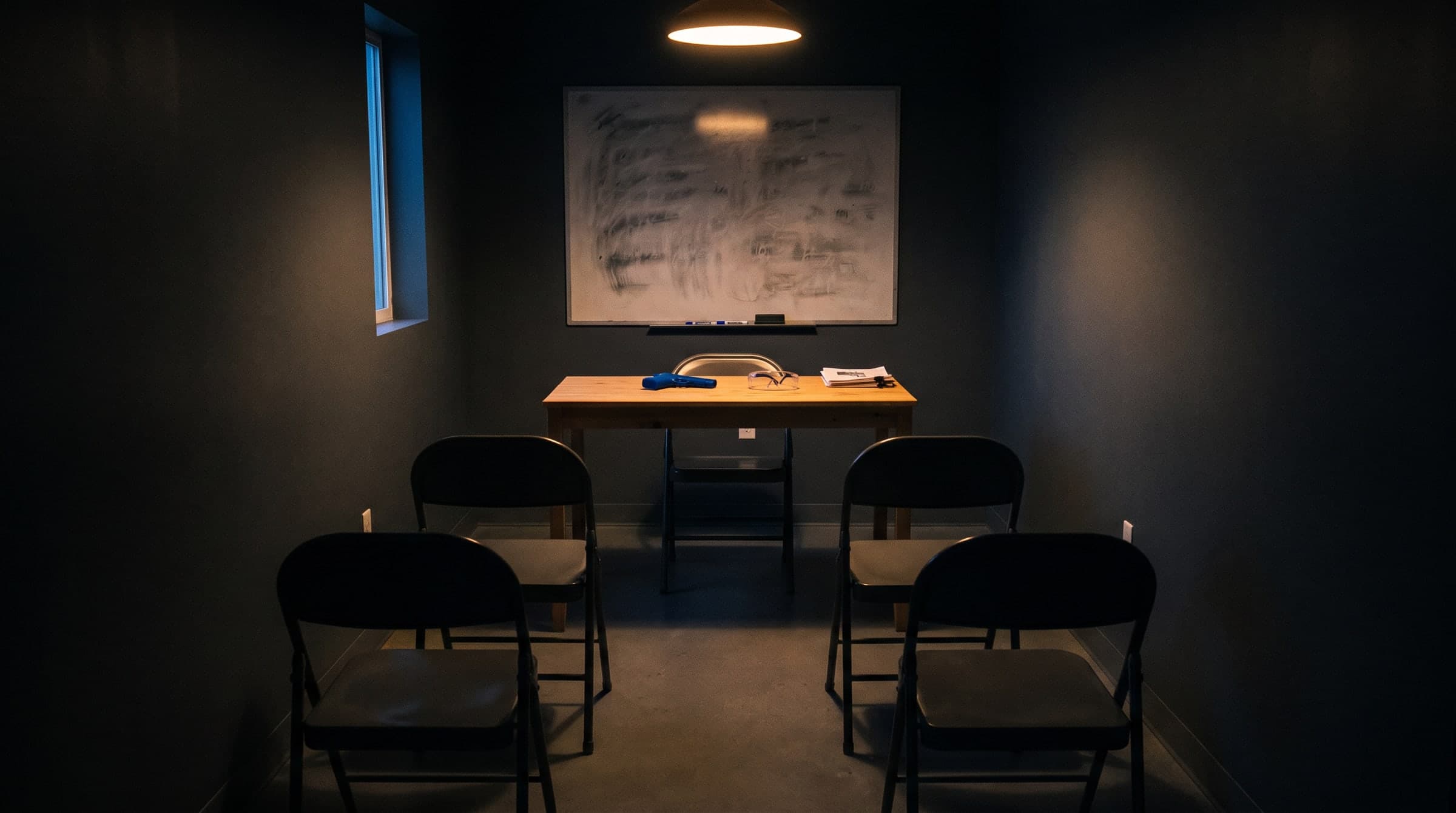
The class opens in the classroom. Safety begins with the right attitude and the knowledge to support it, so the rules are taught before anything is handled.
You see it and handle it
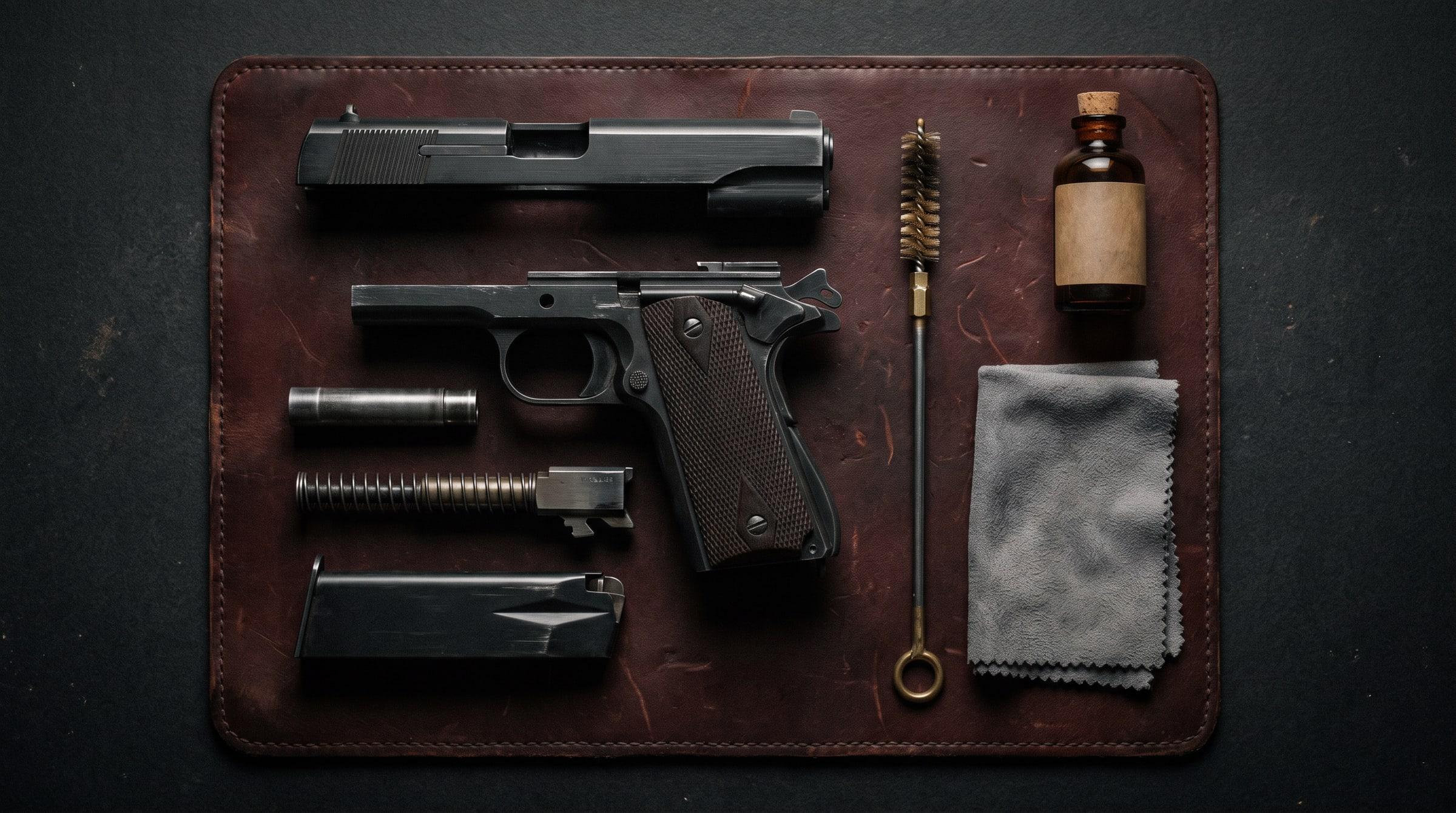
Visual aids, printed material and more than one type of firearm let you see and handle what is being explained. Grip and stance are practiced with an inert training pistol.
You step onto the line
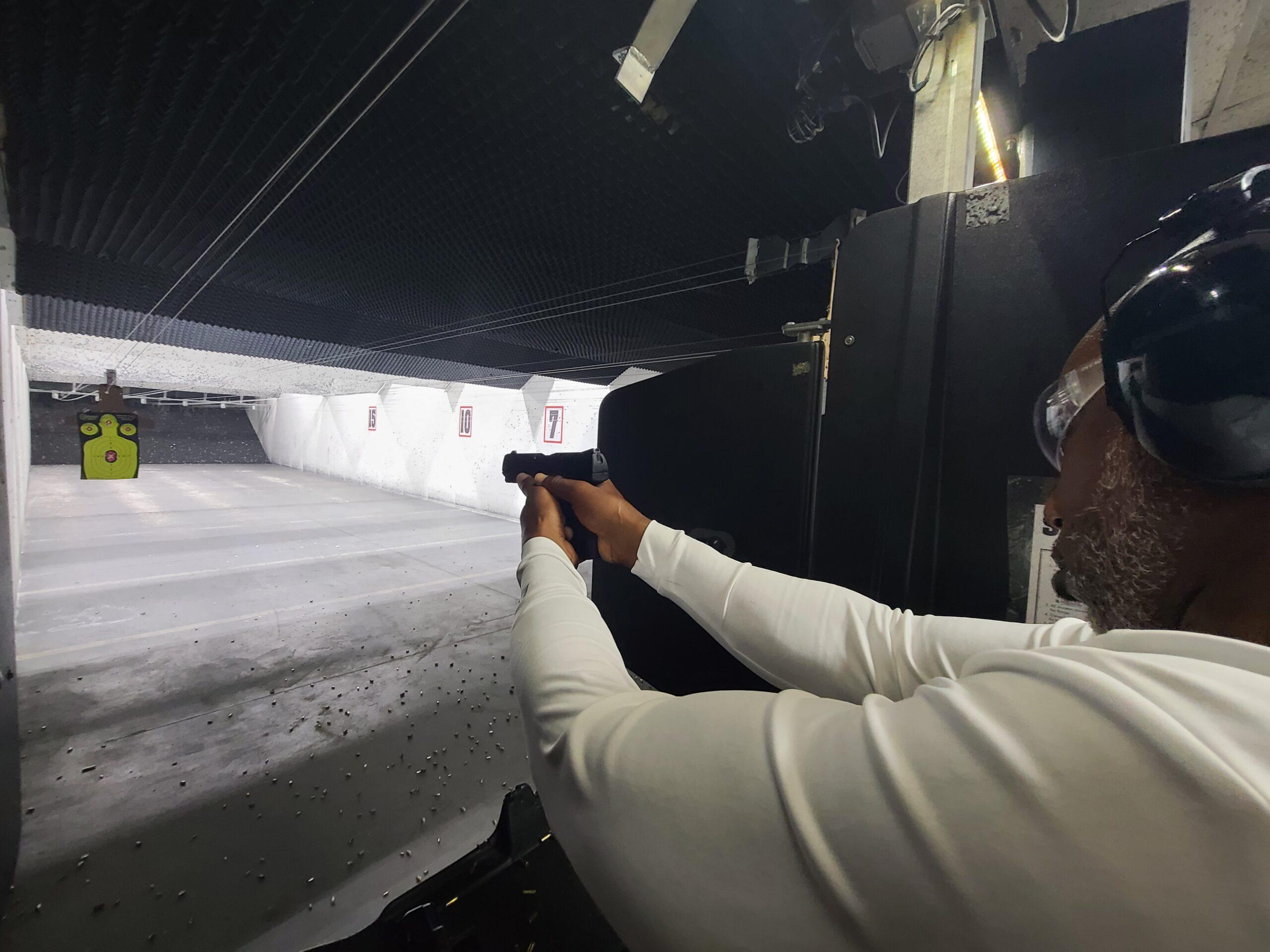
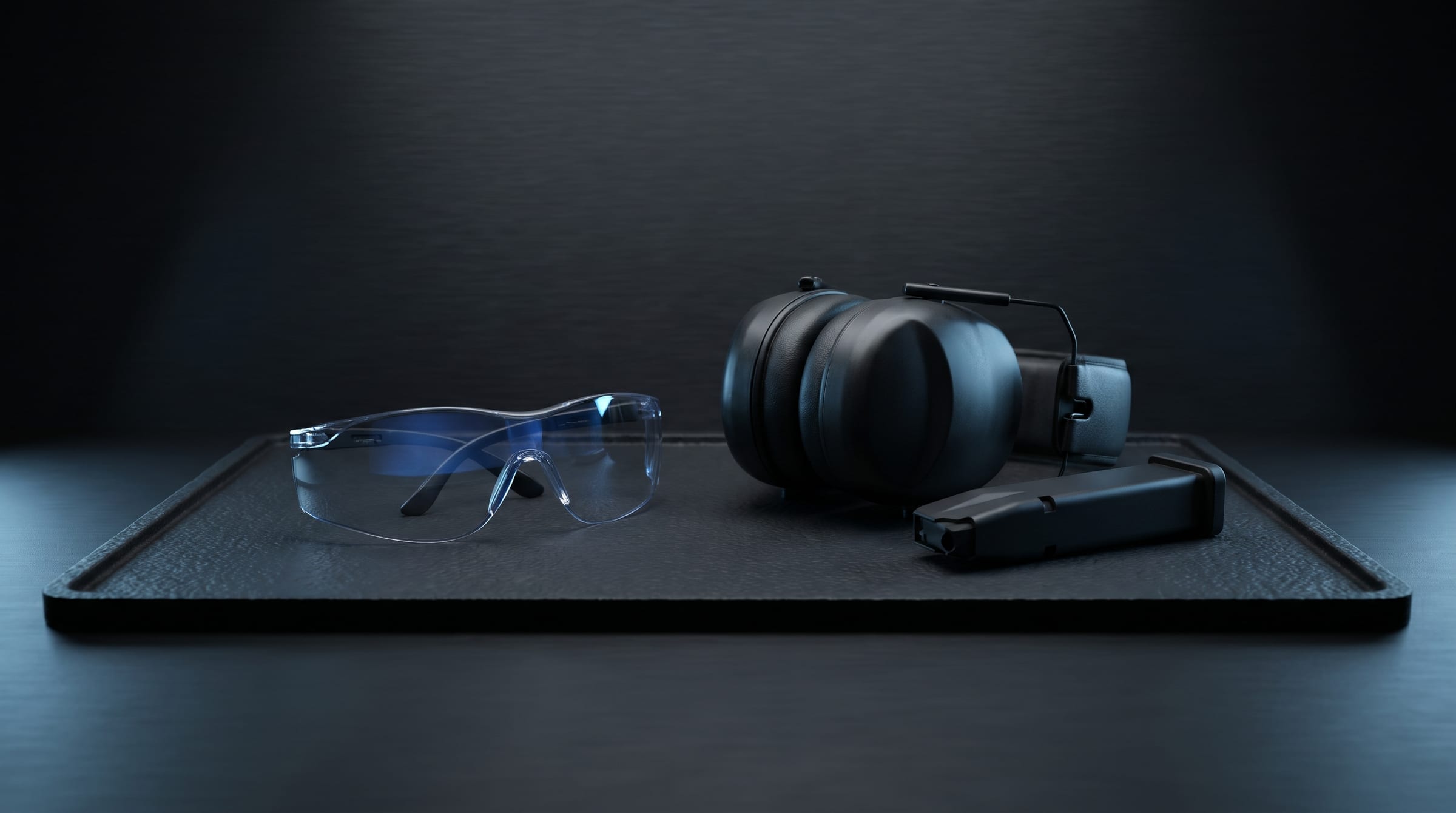
Eye and ear protection goes on, and you move to the range. The muzzle stays pointed downrange from this moment until you pack up.
You shoot, with an instructor beside you
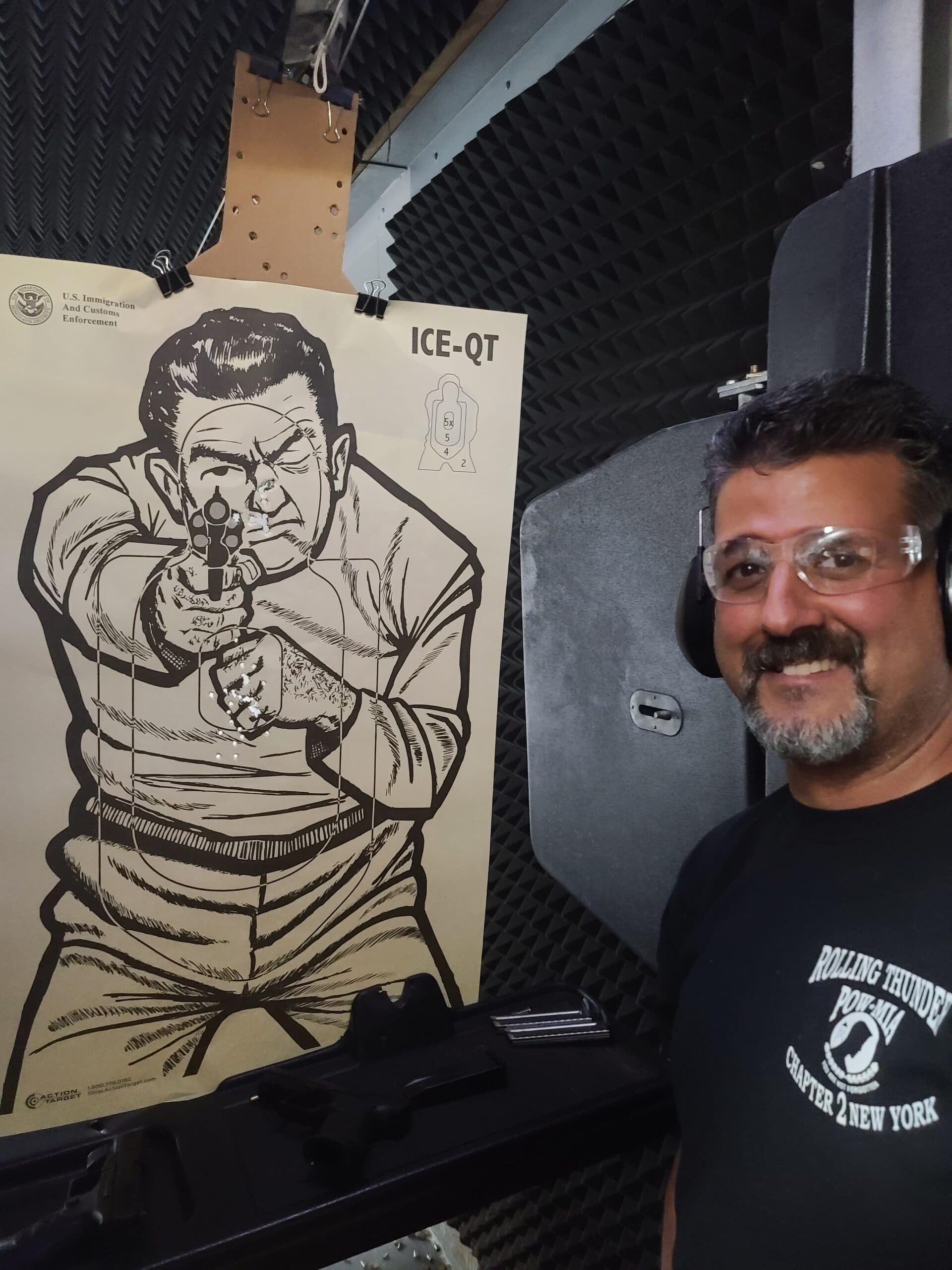
You fire a real pistol with live ammunition, on a range, under supervision. The instructor stands close enough to correct a habit the instant it slips.
You finish with a certificate
The class ends with a certificate of completion. The class page states which certificate each class awards.
Which safety rules will I learn first?
Before anyone shoots, everyone in the room can say the rules that keep a firing line safe. Four of them do most of the work, and each one has a place on the lane. Our article on range safety sets out the full list of ten.
Treat every firearm as loaded
Even when you know it is not, handle it as though it is.
Muzzle downrange
Point the firearm in a safe direction. On a range that means downrange, at all times, including while you load and while you pack up.
Finger off the trigger
Your finger stays off the trigger until you are ready to shoot.
Know what is beyond the target
Be sure of your target and of what lies behind it. If you are not sure, you do not shoot.
What should I bring, and what stays at home?
Less than most people expect. A first class is built for someone who owns no equipment at all.
Bring
Your confirmation email
It carries your reference, the time, and the address of the location you booked.
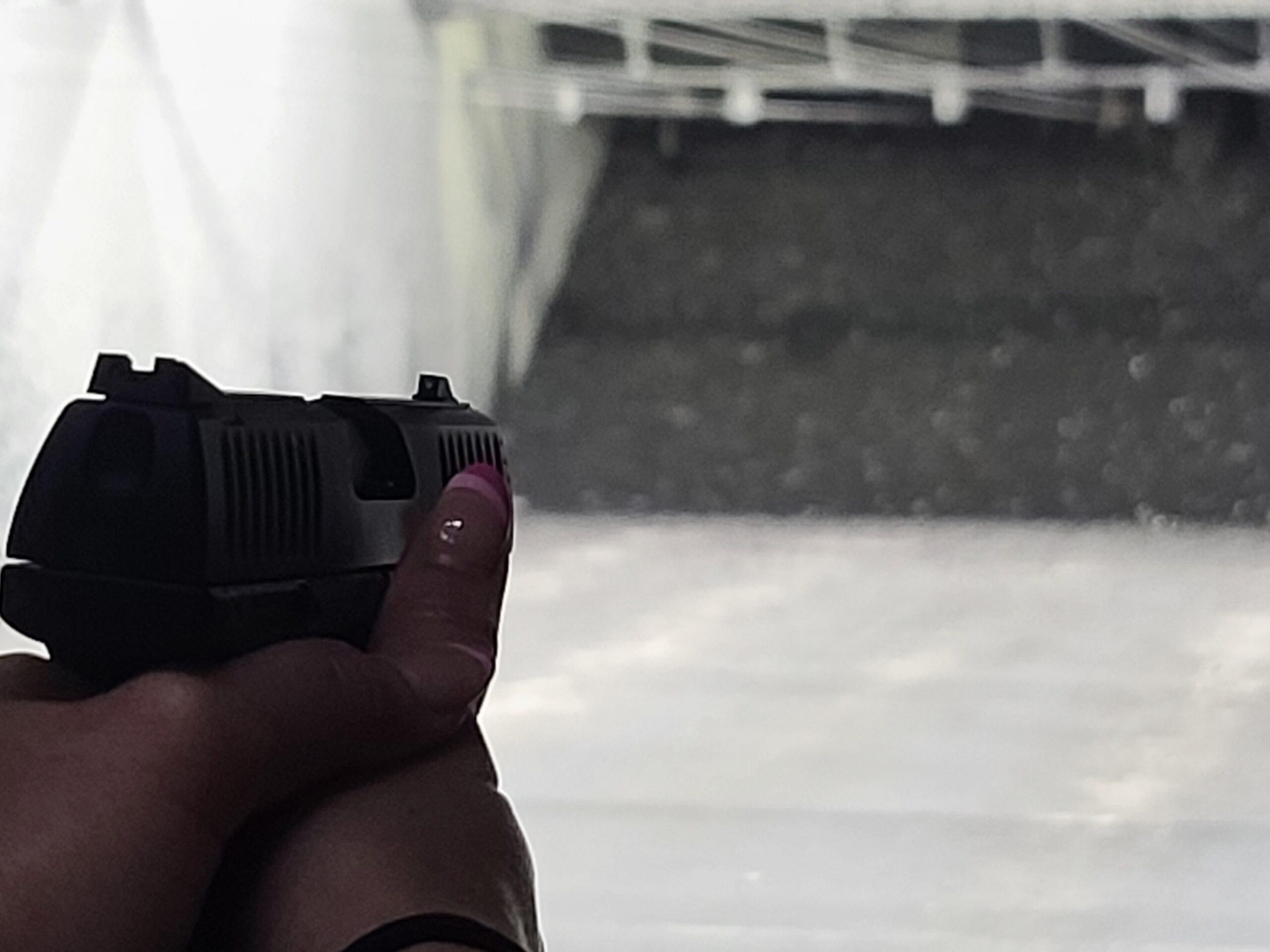
Eye and ear protection, if you own them
If you do not, we have you covered.
Your own pistol, only if you have one
It travels unloaded. If you do not own one, we provide a firearm for training, and plenty of students train before they ever buy.
Your questions
Nothing is assumed in a first class, so nothing is too basic to ask.
Leave at home
A loaded firearm
A firearm stays unloaded until you are ready to shoot, and that includes the trip to and from the range.
Alcohol, or anything else that dulls you
Never before or during shooting. Either one impairs judgment and reaction time.
The worry that you need to own a gun first
You do not. Owning one is a decision you can make after you have been taught.
The idea that you must keep up
A first class starts where you actually are.
Ammunition and the range’s own lane fee are separate from tuition, and what is provided can differ from class to class. The class page lists exactly what is included in each class and what each extra costs, and your confirmation email repeats it for the class you booked.
What if I am nervous?
Then you are in the right class. Nothing is assumed and nothing is rushed. The instructor explains a thing, shows it, and has you handle it before you are asked to do it on the line.
On the range the instructor stays beside you. Muzzle discipline that holds while you are fumbling a magazine, and a trigger finger that rests outside the guard without being told, come from someone correcting you the instant it slips. That is what the supervised part of the class is for.
If a room of strangers is the part that worries you, a private session has no group to keep pace with, and you can bring people you know and train together.
Reading the rules takes two minutes. Making them automatic takes someone standing beside you.
Group class or private session?
The subject and the standard are the same either way. What changes is the calendar and who is in the room.
| Question | Group class | Private session |
|---|---|---|
| When it runs | On dates we schedule | On the date and time you pick |
| Who is in the room | A small class of other students | You, or you and the people you bring |
| Pace | A small class setting that keeps the instructor’s attention on each student | One instructor, your pace, starting wherever you are |
| Who teaches it | NRA-certified instructors | The same NRA-certified instructors |
| How you book | Online, when a date has an open seat | Online, by card, with no account to create |
Either way you book online and the confirmation arrives by email. That email holds a link to move or cancel the booking yourself, and a booking is fully refundable up to 72 hours before the class starts.
What do I leave with?
A certificate of completion, and the handling that earned it. For many students the certificate matters because of what Florida does with it.
Florida calls its carry permit a Concealed Weapon License. The statute says the Department of Agriculture and Consumer Services “is authorized to issue licenses to carry concealed weapons or concealed firearms to persons qualified as provided in this section” (Fla. Stat. 790.06(1)(b)).
One of the things an applicant must show is competence. Section 790.06(2)(h) requires that the applicant “Demonstrates competence with a firearm by any one of the following”, and one of the listed ways is “Completion of any firearms training or safety course or class conducted by a state-certified or National Rifle Association certified firearms instructor”.
The same paragraph says what proves it. It lists “A photocopy of a certificate of completion of any of the courses or classes” among the documents that “shall constitute evidence of qualification under this paragraph”.
It also explains why your instructor watches you shoot. An instructor who attests to the course must keep records certifying that “he or she observed the student safely handle and discharge the firearm in his or her physical presence”.
On our class pages, Basic Pistol and the Concealed Carry Course are among the classes listed as carrying the certificate for a Florida license application. Each class page shows which certificate that class awards.
Quoted from section 790.06 of the 2026 Florida Statutes as published by the Florida Senate, read in November 2026. Competence is one requirement among several, and the department decides each application. This page is general information written by firearms instructors. It is not legal advice.
What comes next?
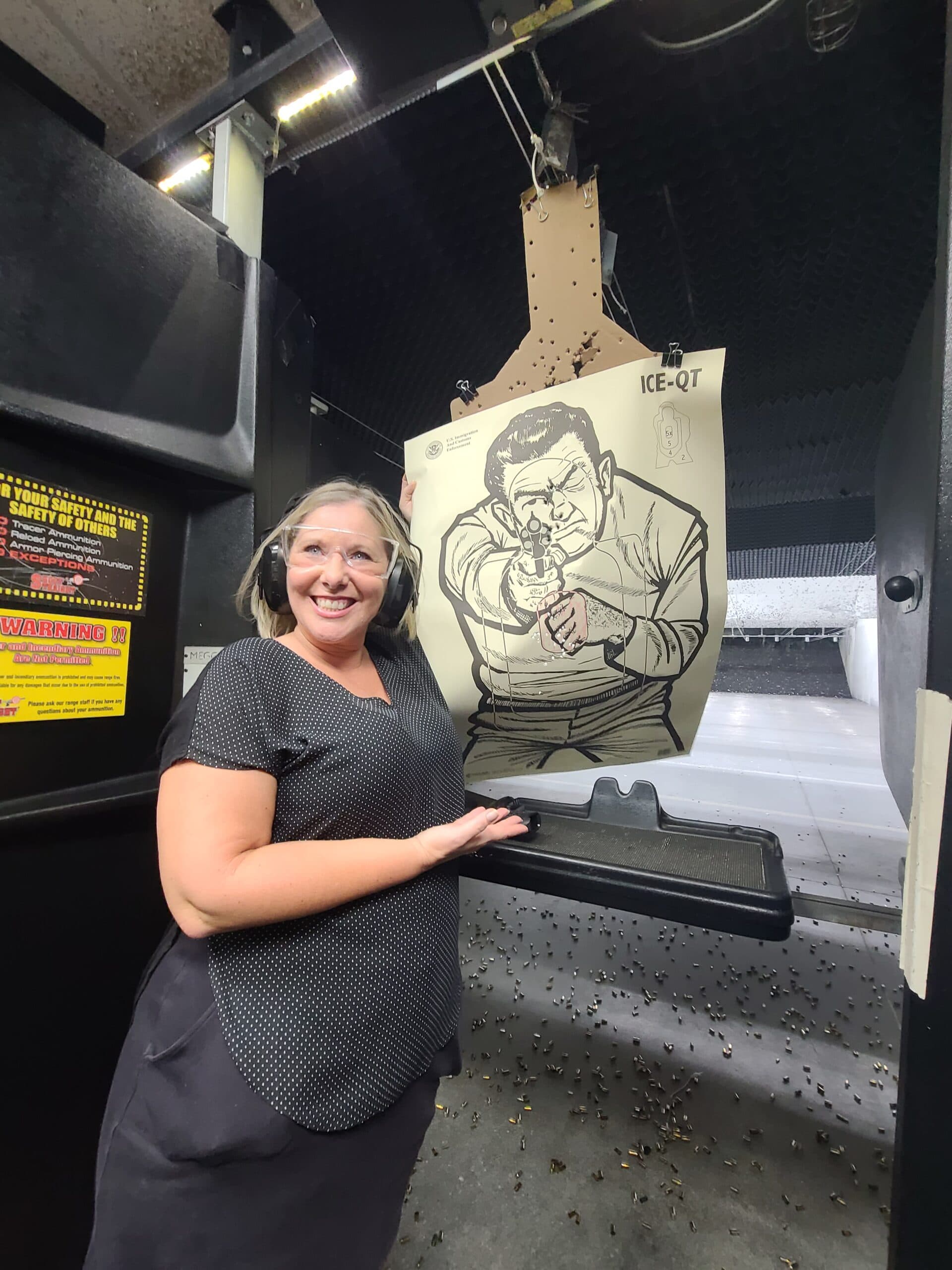
Three things, in whatever order suits you. Keep the habits: the rules only stay automatic if you use them, and our range safety article is the list to reread before your next visit to any range.
If you want the license, our step-by-step guide to the Florida application walks through the state’s process once you hold your certificate.
And if you want to keep learning, the rest of the curriculum is on the pistol classes page, with more reading in The NSC Hub.