
How an FFL transferworks in Florida
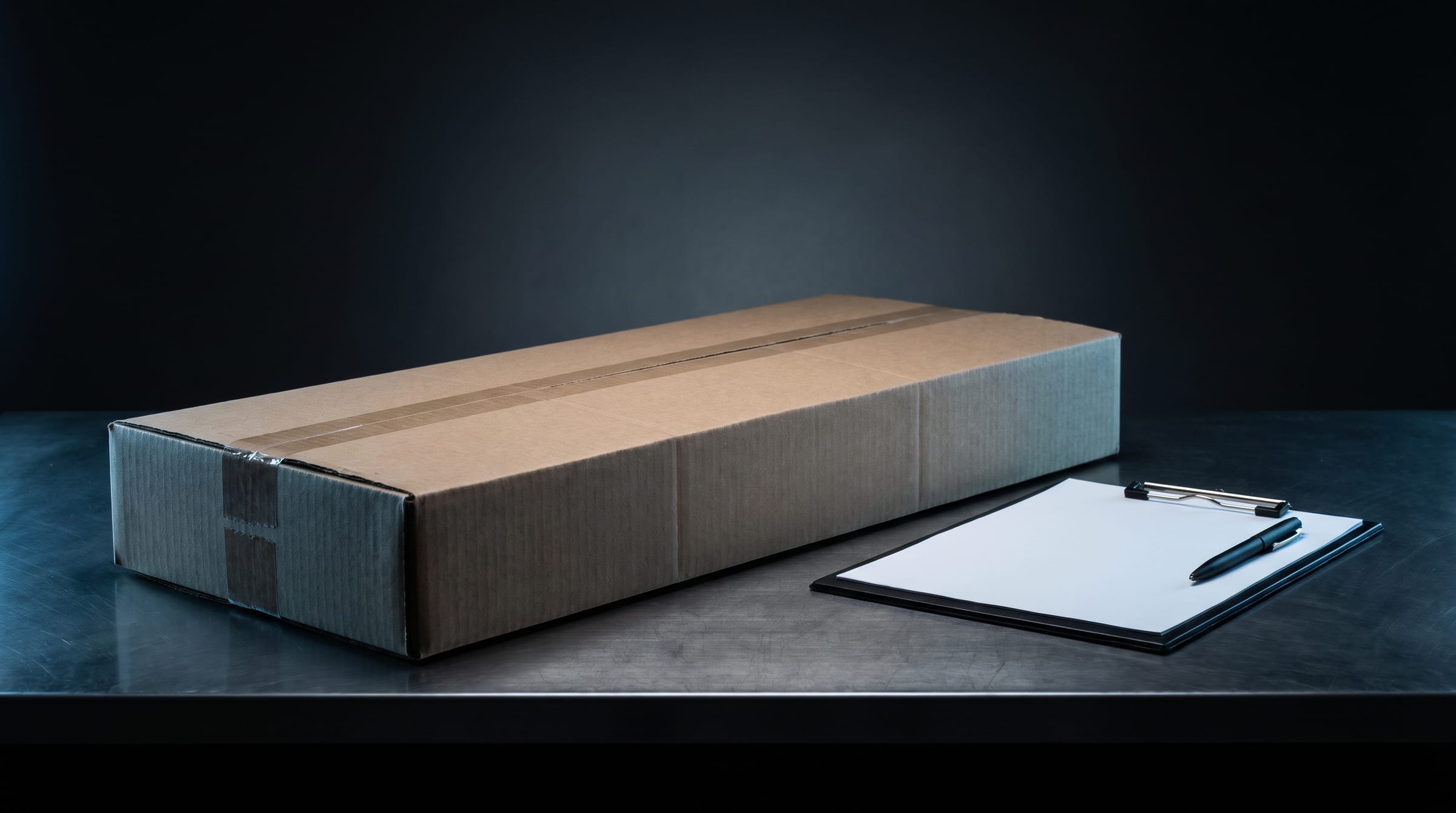
A firearm you buy online does not come to your door. The seller ships it to a licensed dealer near you, called an FFL, and you collect it there in person. At the counter you complete ATF Form 4473, the dealer requests a Florida background check, and Florida’s waiting period runs unless you are exempt. Then the dealer hands it over.
That handover is an FFL transfer. This page walks through each step, what to bring, and what can slow it down, with the statute or regulation behind every rule.
- What it is
- A licensed dealer near you receives a firearm you bought elsewhere and hands it to you in person, on the record.
- The form
- ATF Form 4473, the Firearms Transaction Record, completed by you at the counter.
- The check
- A background check the dealer requests from the Florida Department of Law Enforcement (FDLE).
- The wait
- Three days, not counting weekends and legal holidays, or until the check is complete, whichever is later. Some buyers are exempt.
- Checked
- Against the statutes and regulations cited below, as of November 2026.
What is an FFL, and why can’t the seller ship to my door?
FFL stands for Federal Firearms Licensee: a business licensed under federal law to deal in firearms. People use the same three letters for the license and for the dealer who holds it. National Safety Center holds one.
Federal law makes it unlawful for a licensed seller to ship a firearm across state lines to anyone who is not also a licensee, with narrow exceptions (18 U.S.C. 922(a)(2)). A person who is not licensed may not, with limited exceptions, bring home or receive a firearm obtained outside their own state, or transfer one to a resident of another state (27 CFR 478.29 and 478.30). So a firearm sold from another state travels from the seller to a licensed dealer in the buyer’s state, and the dealer completes the transfer.
Handguns and long guns are treated differently. A dealer may not sell or deliver a handgun to a resident of another state at all. A rifle or shotgun may be sold to an out-of-state resident who meets the dealer in person, where the sale is lawful in both states (27 CFR 478.99(a), 478.96(c)). An online order is not an in-person meeting, so it goes through a dealer near you either way.
The same holds in practice when a dealer in Florida is not handing the firearm to you in person: it is sent to a licensed dealer near you, because the form, the identification check and the background check below are all done face to face.
What happens between the order and the pick up?
Seven things, in this order. Three are yours to do. The rest happen between the seller, the dealer and the state.
- 1
You
Order online and choose a receiving dealer
At checkout the seller or marketplace asks which licensed dealer should receive the firearm. You name a dealer near you and give the seller that dealer’s address.
- 2
Seller and dealer
The seller confirms the dealer is licensed
Before a licensed seller ships to another licensee, it verifies that licensee’s status from a certified copy of the license. This happens between the two businesses. You do not send anything.
- 3
Dealer
The firearm arrives and is logged
The dealer enters the firearm in its federal record of receipts and dispositions, then tells you it has arrived.
- 4
You
You come in with your ID and complete Form 4473
You fill out the federal transaction record yourself, in person. The dealer examines your identification.
- 5
Dealer and FDLE
The dealer requests the Florida background check
The request goes to the Florida Department of Law Enforcement, which answers with an approval number, a conditional answer, or a nonapproval.
- 6
Everyone waits
The waiting period runs, unless you are exempt
Three days, not counting weekends and legal holidays, or until the check is complete, whichever is later.
- 7
You
Pick up
The dealer records the transfer and hands the firearm to you.
Step two is a federal requirement, not a courtesy: a licensed seller must verify the receiving dealer’s licensed status from a certified copy of its license before the transaction (27 CFR 478.94). Step three is too. A dealer records each firearm it receives no later than the close of the next business day (27 CFR 478.125(e)).
With us, you tell us it is coming, with the seller’s name and your order number, and we email you the day it lands. Pick up with us is by appointment, booked from that email or by phone. How to name us as your dealer, the address to give the seller and the current fee are on our FFL transfer page.
What paperwork do I fill out at the counter?
ATF Form 4473
Form 4473 is the federal Firearms Transaction Record. A dealer may not transfer a firearm to an unlicensed person without recording the transaction on one (27 CFR 478.124(a)). You complete it yourself. It asks for your name, residence address, date and place of birth, height, weight, sex, race, citizenship and state of residence, and it has you certify that you are not prohibited from receiving a firearm. A social security number is optional on the federal form; the regulation says it may help avoid being misidentified (27 CFR 478.124(c)).
The dealer keeps the completed form in its own records (27 CFR 478.124(b)).
The Florida background check
Federal rules require a background check before a dealer transfers a firearm (27 CFR 478.102). In Florida the dealer sends that request to the Florida Department of Law Enforcement. Under Fla. Stat. 790.065(1)(a) the dealer inspects photo identification, collects the state’s processing fee for the check, asks FDLE to run it, and must receive “a unique approval number for that inquiry” before delivering the firearm. FDLE sets that fee; ask the dealer for the current amount.
The statute has FDLE answer during the dealer’s request or by return call, so we submit the check while you wait. It also provides for a conditional answer when a record needs a closer look, covered under delays below.
What the state keeps afterward
For a buyer who is approved, the statute requires FDLE to destroy the records it created for the check “within 48 hours after the day of the response”, and it says nothing in the chapter allows the State of Florida “to maintain records of firearm transactions” (Fla. Stat. 790.065(4)). The Form 4473 and the dealer’s record of the firearm stay with the dealer.
How does Florida’s waiting period work?
Florida puts a mandatory wait between buying a firearm from a dealer and taking it home. It comes from two texts, and they are not worded the same way, so both are quoted here as they read in November 2026.
“There shall be a mandatory period of three days, excluding weekends and legal holidays, between the purchase and delivery at retail of any handgun.”
“A mandatory waiting period is imposed between the purchase and delivery of a firearm. The mandatory waiting period is 3 days, excluding weekends and legal holidays, or expires upon the completion of the records checks required under s. 790.065, whichever occurs later.”
Read together: the Constitution sets the wait for handguns, and the statute is worded for “a firearm”, which is wider. The statute also gives the wait two parts. Three days must pass, with weekends and legal holidays left out of the count, and the background check must be complete. Whichever finishes later ends the wait.
The statute defines “purchase” as “the transfer of money or other valuable consideration to the retailer.” For a firearm bought online and received through a dealer, do not count the days from your order date yourself. Ask the dealer which day your wait ends. Unless you are exempt, plan on a second visit to pick up.
Who the waiting period does not apply to
Three circumstances, in the words of Fla. Stat. 790.0655(2). The Constitution adds that the handgun rule does not apply to holders of a concealed weapon permit or to “a trade in of another handgun.”
- License holders
When a firearm is being purchased by a holder of a concealed weapons or concealed firearms license.
The statute defines that holder to include a person with a valid license under s. 790.06, a law enforcement officer, correctional officer or correctional probation officer as defined in s. 943.10, and a servicemember as defined in s. 250.01.- Trade-ins
To a trade-in of another firearm.
- Rifles and shotguns, with hunter safety
To the purchase of a rifle or shotgun, upon a person’s successfully completing a minimum of a 16-hour hunter safety course and possessing a hunter safety certification card issued under s. 379.3581.
A person exempt from the hunter safety course requirements who holds a valid Florida hunting license is also exempt for a rifle or shotgun.
What should I bring?
A current government-issued photo ID that shows your present address
The dealer must examine an identification document. Federal rules define one as carrying your name, residence address, date of birth and photograph.
A second government document, if the address on your ID is out of date
It shows where you live now. Ask the dealer beforehand which documents it accepts.
Your Florida concealed weapon license, if you hold one
The waiting period does not apply to a license holder.
The seller’s name and your order number
So the dealer can match the package to you.
The identification rule is federal. The dealer “shall verify the identity of the transferee by examining the identification document” you present (27 CFR 478.124(c)(3)(i)), and the regulations define that document as one “containing the name, residence address, date of birth, and photograph of the holder”, issued by a government (27 CFR 478.11). An ID with an old address is the easiest problem to prevent, so look at yours before you come in.
What does the dealer check, and where does each rule come from?
None of what happens at the counter is the dealer’s own invention. Each check traces to a federal regulation or a Florida statute, and you can read every one of them.
| The dealer checks | What that means | The rule |
|---|---|---|
| Who you are | The dealer examines a government-issued identification document and notes on the form which one it was. | 27 CFR 478.124(c)(3)(i)27 CFR 478.11 |
| Where you live | A dealer may not sell or deliver a handgun to a resident of another state. A rifle or shotgun may be sold to an out-of-state resident in person, if the sale is lawful in both states. | 27 CFR 478.99(a)27 CFR 478.96(c) |
| The Form 4473 | No firearm leaves a dealer for an unlicensed person without one. The dealer keeps the completed form in its records. | 27 CFR 478.124(a) and (b) |
| The background check | The dealer asks FDLE to run the check and must receive a unique approval number before delivery. | Fla. Stat. 790.065(1)(a)27 CFR 478.102 |
| The waiting period | The dealer may not deliver before it ends, unless one of the statute’s exemptions applies. | Fla. Stat. 790.0655Fla. Const. Art. I, s. 8(b) |
| The firearm itself | Recorded by the dealer when it arrives, no later than the close of the next business day, and again when it leaves. | 27 CFR 478.125(e) |
What can delay or stop a transfer?
An ID that does not show where you live now
The identification document has to carry your residence address. If yours is out of date, bring a second government document with the current one, and check with the dealer before you make the trip.
A conditional answer from FDLE
If FDLE’s review finds an indictment, an information, certain injunctions or an arrest for one of the offenses the statute lists, it gives the dealer a conditional nonapproval number and then has 24 working hours to determine how the matter ended. The statute counts working hours as “8 a.m. to 5 p.m. Monday through Friday, excluding legal holidays” (Fla. Stat. 790.065(2)(c)). The firearm stays with the dealer until FDLE gives an approval.
A nonapproval
If FDLE’s records show the buyer is prohibited, the dealer receives a nonapproval number and cannot deliver the firearm. The statute gives a person who is denied the right to “request a criminal history records review and correction” under FDLE’s rules (Fla. Stat. 790.065(6)). With us, a firearm whose check is denied goes back to the seller at the buyer’s cost, as our transfer terms set out.
Waiting too long to collect
A background check does not last indefinitely. Under federal rules it covers a single transaction for no more than 30 calendar days from the day the check was started; after that the dealer must start a new one (27 CFR 478.102(c)). Dealers also set their own pickup window. Ours, and what applies after it, is on the FFL transfer page.
A package the dealer was not expecting
We refuse a package we cannot match to a customer. We also do not receive items regulated under the National Firearms Act, or firearms shipped by anyone other than a licensed dealer, unless that was arranged with us in writing first. Tell the dealer before the seller ships, and ask the seller to put your name and order number on the paperwork.
Firearm law changes, and the rules quoted here are as they read in November 2026. This page is general information written by a licensed dealer. It is not legal advice, and it does not say whether any one person may buy or receive a firearm. For your own situation, read the statutes linked above or speak to an attorney.
New to the firearm you bought?
The transfer puts the firearm in your hands. It does not teach you to run it. If this is your first pistol, or your first of this kind, a few supervised hours on a range lane are the fastest way to learn its controls and build safe habits with it. Our pistol classes start from the beginning.
If you need a firearm you already own kept out of the home for a while, that is a separate service: firearm storage with a licensed dealer. More plain-language guides like this one are in The NSC Hub.
Have it sent to us
Name National Safety Center in Maitland as your receiving dealer. The address to give the seller, the current fee and the pickup window are on our transfer page.
Questions about a transfer? Call us on (407) 479-3790.