
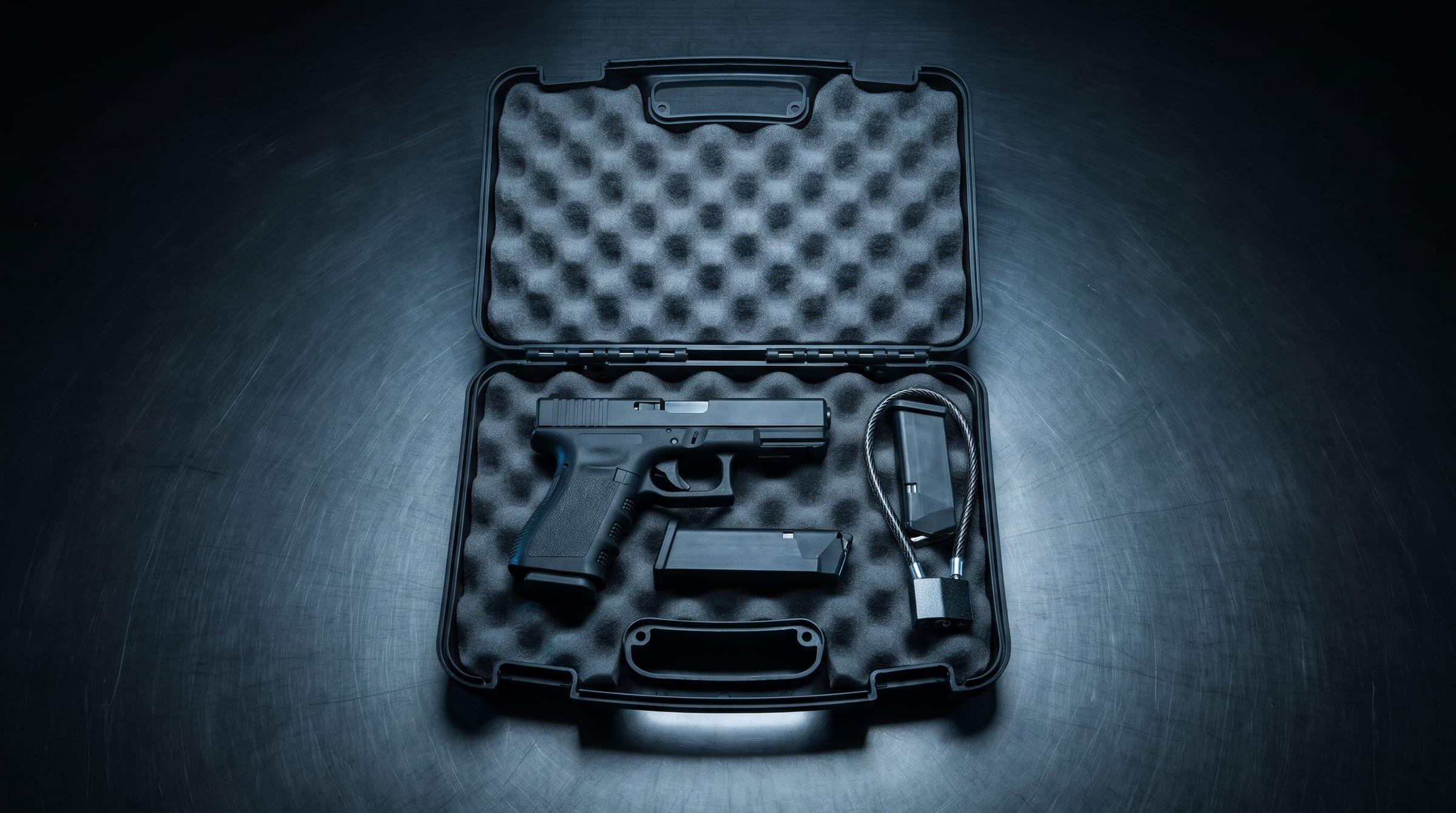
Buying your firsthandgun in Florida
To buy a handgun from a licensed dealer in Florida you show government photo identification, fill in ATF Form 4473, and the dealer requests a background check from the Florida Department of Law Enforcement. Florida then imposes a mandatory waiting period of 3 days, excluding weekends and legal holidays, between the purchase and the delivery.
The paperwork is one visit. The wait is what sets the day you take the handgun home, and it does not apply to the holder of a Florida concealed weapon license. Everything below is the law as it reads in November 2026, with the section beside each rule.
- The form
- ATF Form 4473, the federal firearms transaction record (27 CFR 478.124)
- The check
- Requested by the dealer from the Florida Department of Law Enforcement (Fla. Stat. 790.065)
- The wait
- 3 days, excluding weekends and legal holidays, or until the records check is complete, whichever is later (Fla. Stat. 790.0655)
- Minimum age
- 21, as Fla. Stat. 790.065(13) reads as of November 2026
- Sources read
- November 2026
What are the steps?
Seven, and only one of them takes more than a few minutes. The order at the counter varies a little from store to store. What does not vary is that the waiting period is measured from the purchase, and the statute defines that word: “the transfer of money or other valuable consideration to the retailer.”
Decide, and train first
Learn to handle a handgun safely and find out what fits your hand before you spend money on one.
Choose the handgun at a licensed dealer
A dealer holding a federal firearms license is the seller this page describes.
Show identification and complete Form 4473
You fill in the federal form yourself and sign it. The dealer examines your identification.
The dealer requests the background check
The request goes to the Florida Department of Law Enforcement, which answers the dealer with an approval or a nonapproval number.
Pay
In the statute, "purchase" means the transfer of money to the retailer. The waiting period is measured from here.
The waiting period
3 days, excluding weekends and legal holidays, or until the records check is complete, whichever is later. It does not apply to the holder of a Florida concealed weapon license.
Take it home
The dealer delivers the handgun to you in person once the period has expired.
What will the store ask of me?
Nothing at the counter is the store’s own idea. Each request traces to a federal regulation or a Florida statute, and a dealer who skips one is breaking the rule it comes from.
| What the store asks for | Why | The rule |
|---|---|---|
| Government photo identification | The dealer must verify who you are by examining an identification document: one issued by a government, with your name, residence address, date of birth and photograph. | 27 CFR 478.124(c)(3)(i) and 478.11; Fla. Stat. 790.065(1)(a)1 |
| ATF Form 4473, filled in by you | A licensed dealer may not sell a firearm to anyone but another licensee unless the sale is recorded on this form. | 27 CFR 478.124(a) and (c)(1) |
| Your signature on the form | You certify that your answers are true, correct and complete, and that you are not prohibited from receiving a firearm. | Form 4473, instructions and certification; 27 CFR 478.124(c)(1) |
| A fee for the background check | The dealer collects it from the buyer for the state. The Department of Law Enforcement sets the amount and the statute caps it. | Fla. Stat. 790.065(1)(a)2 |
| Your date of birth | It goes on both the federal form and the state request, and Florida sets a minimum age to purchase. | 27 CFR 478.124(c)(1); Fla. Stat. 790.065(1)(a)1 and (13) |
| Your patience | The dealer may not hand the firearm over before the waiting period has expired, unless an exemption in the statute applies. | Fla. Stat. 790.0655(1)(a) and (2) |
Form 4473 is a federal record of the sale. It asks for your name, residence address, date and place of birth, height, weight and a few other details, then a series of yes or no questions about whether the law bars you from receiving a firearm. The form’s own instructions say the buyer “must personally complete Section B of this form and certify (sign and date) that the answers are true, correct, and complete.” Read each question slowly and answer it truthfully. If you do not understand one, ask before you sign.
The form also asks for a Social Security number. The federal regulation calls that “optional information” and explains what it is for: it “may help avoid the possibility of the transferee being misidentified as a felon or other prohibited person.”
What is the Florida background check?
In Florida the dealer does not judge whether you may buy. The Florida Department of Law Enforcement does. Under Florida Statutes s. 790.065, a licensed dealer may not sell or deliver a firearm until it has asked the department “to conduct a check of the information as reported and reflected in the Florida Crime Information Center and National Crime Information Center systems” and has “received a unique approval number for that inquiry.”
The statute tells the department to review its records “during the licensee’s call or by return call, forthwith.” At our counter we submit the request while you wait.
What the department looks for is set out in subsection (2) of the same statute, and federal law adds its own list on Form 4473. We are not going to summarize either one here, because a summary is exactly where a reader goes wrong. If you are unsure how a question applies to you, read the statute and speak to an attorney before you go to a store.
How long is the waiting period, and how is it counted?
“The mandatory waiting period is 3 days, excluding weekends and legal holidays, or expires upon the completion of the records checks required under s. 790.065, whichever occurs later.”
Three things in that sentence decide your date. The period runs “between the purchase and delivery of a firearm,” so it starts when you pay, not when you first walk in. Saturdays, Sundays and legal holidays are not counted. And if the records check is still open when the three days are up, the wait continues until the check is complete.
- Solid: a day that counts toward the three.
- Dashed: a weekend day, which does not count. A legal holiday does not count either, whatever day it falls on.
Who does the waiting period not apply to?
Section 790.0655(2) lists three circumstances, in these words. Two can apply to a handgun:
- “When a firearm is being purchased by a holder of a concealed weapons or concealed firearms license.” The statute says that phrase includes a person who holds a valid license issued under s. 790.06, a law enforcement officer, correctional officer or correctional probation officer as section 943.10 defines them, and a servicemember as section 250.01 defines one.
- “To a trade-in of another firearm.”
- The third covers only “the purchase of a rifle or shotgun” by a person with a hunter safety certification, so it never reaches a handgun.
A Florida concealed weapon license changes the wait, not the paperwork: the federal rule on Form 4473 has no exception for license holders. If you expect to buy more than once, our guide to the Florida concealed weapon license application walks through how to get one.
Can a county make the wait longer?
Yes, up to five days. The three day wait for handguns is written into the Florida Constitution at Article I, section 8(b): “There shall be a mandatory period of three days, excluding weekends and legal holidays, between the purchase and delivery at retail of any handgun.” Article VIII, section 5(b) then gives each county a choice: “Each county shall have the authority to require a criminal history records check and a 3 to 5-day waiting period, excluding weekends and legal holidays, in connection with the sale of any firearm occurring within such county.” The same paragraph exempts holders of a concealed weapons permit.
So the number that applies to you depends on the county the store is in. Ask the dealer when you pay. They work under that county’s rule every day.
How old do I have to be?
As of November 2026, Florida Statutes s. 790.065(13) reads: “A person younger than 21 years of age may not purchase a firearm.” The same subsection bars a licensed dealer from making or facilitating the sale. This is a rule that has been argued over in court and in the Legislature, so check the current text of the statute, or ask the dealer, before you rely on any page that states an age, this one included.
What if the handgun is online or in another state?
Then it comes to you through a Florida dealer. Federal regulations bar a person who is not a licensee from receiving, in the state where they live, a firearm obtained outside that state (27 CFR 478.29), and bar a dealer from selling or delivering a handgun to someone who does not reside in the dealer’s state (27 CFR 478.99(a)). In practice the seller ships the handgun to a licensed dealer near you, and you complete the form, the check and the wait there.
National Safety Center is a licensed dealer and receives transfers. Our article on how an FFL transfer works in Florida explains the process, and the FFL transfer page has the current fee, the address to give the seller and what to bring.
What should I do before I buy?
The law tells you how to buy a handgun. It says nothing about which one, and that is the decision that matters most afterwards. The mistake we would steer you away from is buying on a recommendation alone: a friend’s favorite, a name seen online, whatever the person ahead in line bought.
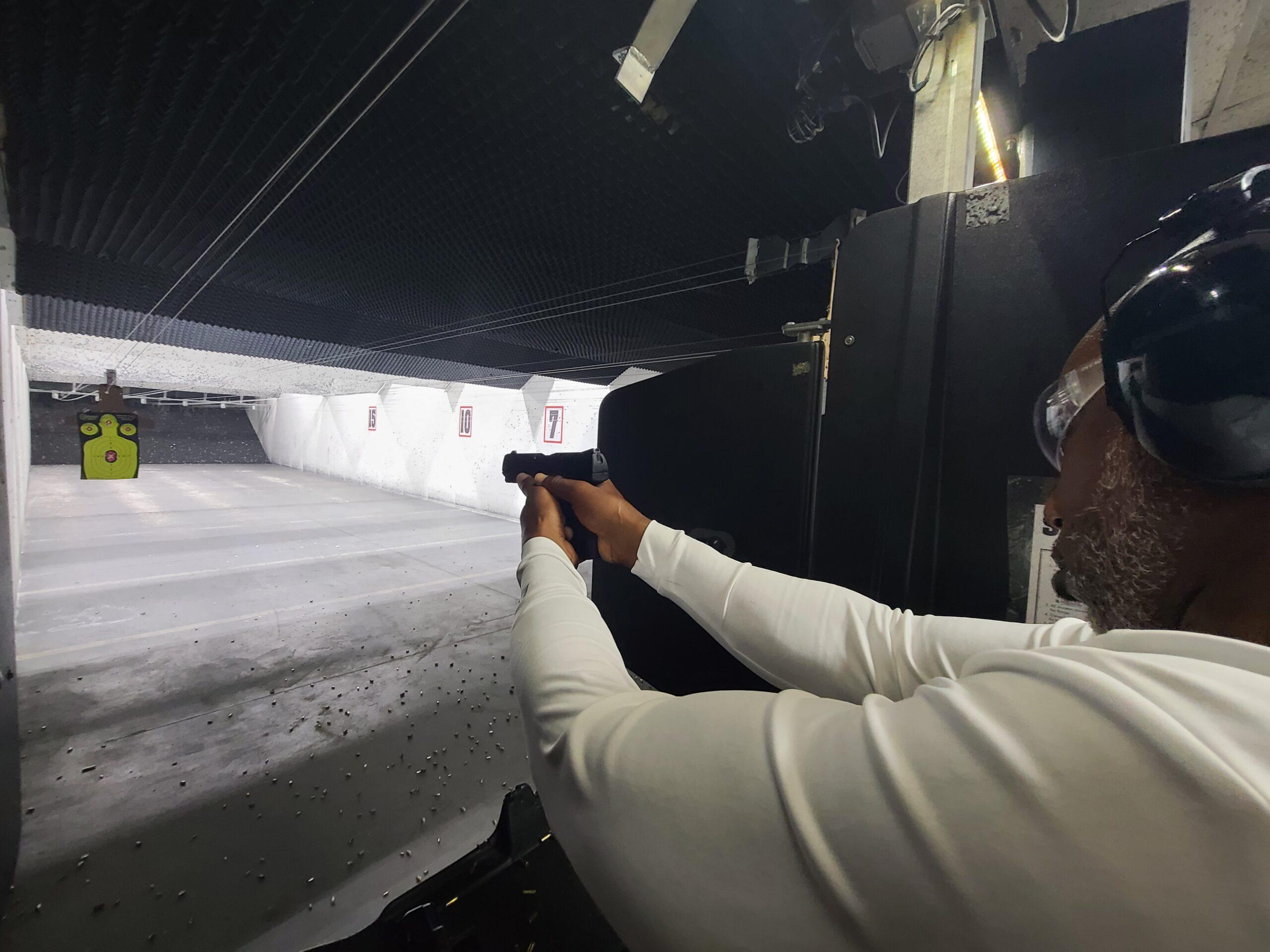
Fit matters more than brand. A handgun that suits one person’s hands and strength can be awkward or tiring for another, and nobody can tell which from a photograph. You find out by handling it, and better still by shooting one with an instructor beside you. That is why we tell people to train first and shop second.
Take a class before you choose
We provide a firearm for training if you do not own one, and plenty of our students train before they ever buy.
Judge the fit, not the name on the slide
Can you reach the trigger and every control without shifting your grip? Can you work the action with your own hands? Fit decides that. A brand does not.
Handle it, and shoot one like it if you can
A handgun that feels right at the counter can feel different under recoil.
Budget past the price tag
A way to lock it up, ammunition to practice with, eye and ear protection, and training are part of the cost of owning it.
Decide where it will be kept before it comes home
Florida sets a storage rule where a child could reach a loaded firearm. It is quoted below.
Bring current identification
At our counter that means a current government photo ID showing your present address, or a second government document showing where you live now.
Our pistol classes are the place to start, Basic Pistol first. You do not need to own a firearm to attend: we provide one for training.
What does Florida require if children are in the home?
Decide where the handgun will live before you bring it home. Florida Statutes s. 790.174 applies to a person who stores or leaves a loaded firearm on premises under their control and “knows or reasonably should know that a minor is likely to gain access to the firearm.” That person “shall keep the firearm in a securely locked box or container or in a location which a reasonable person would believe to be secure or shall secure it with a trigger lock,” except while carrying it on the body or within equally easy reach. For this section a minor is “any person under the age of 16.”
That is the legal floor. Our own advice is plainer: buy the lock or the safe on the same day as the handgun, and use it whether or not children live with you. If a firearm needs to be out of the house for a while, we also offer firearm storage at our licensed premises.
Firearm law changes, and it changes faster than most web pages do. This page is general information written by firearms instructors at a licensed dealer, checked against the statutes and regulations it cites in November 2026. It is not legal advice, and it does not tell you whether you personally may buy a firearm. For that, read the current text of the law at the links above or speak to an attorney.
Train first, then buy
Learn safe handling and find out what fits your hand before you spend money on a handgun. We provide a firearm for training if you do not have your own.
Questions about any of this? Call us on (407) 479-3790.